

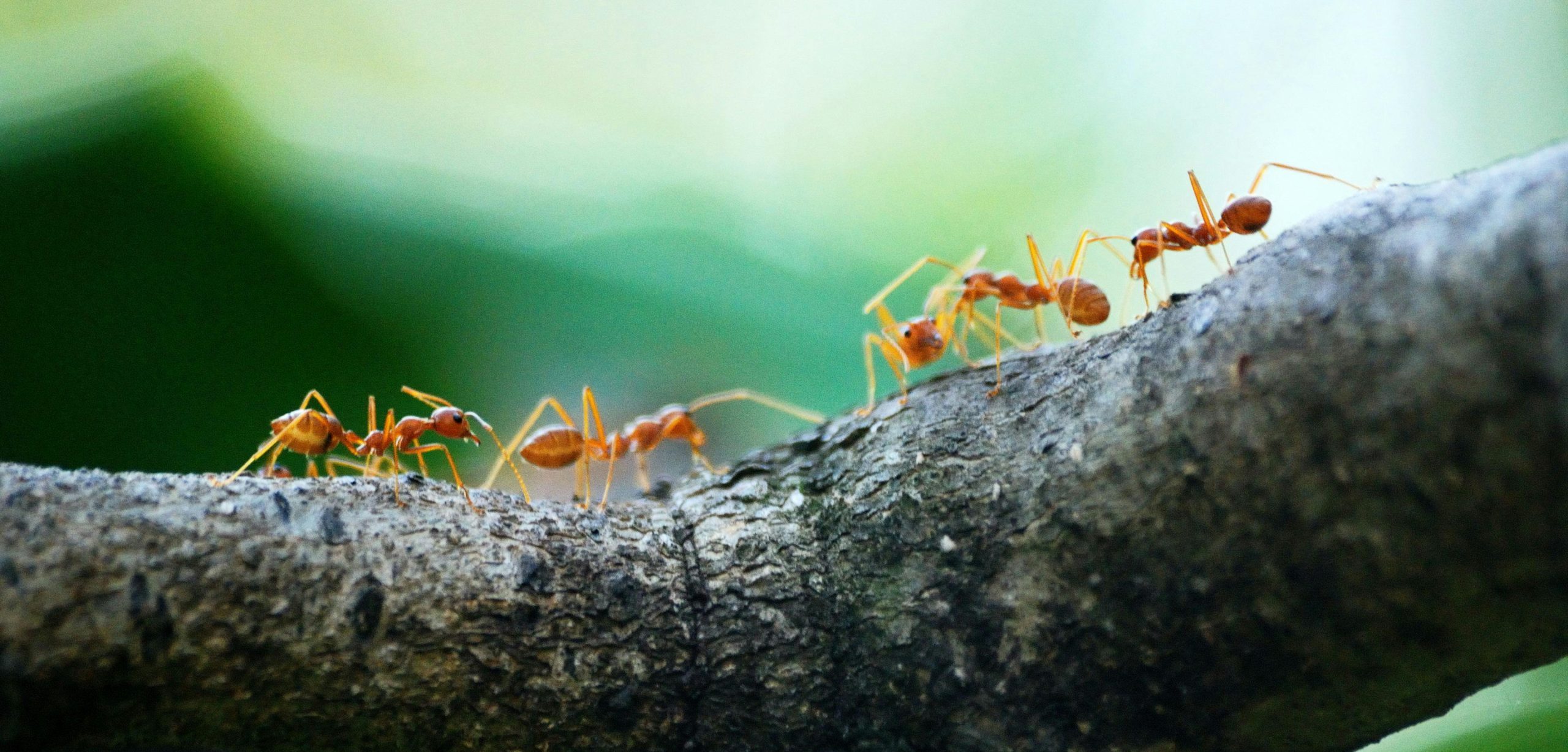
Ants are often considered one of the most common household pests in the world. Those small pesky creatures that always seem to be around are actually among the most complex and resilient pests out there. What may seem like a few measly bugs can quickly become a significant problem in your home or business. In this post, you will learn all about the science behind ants and what makes these pests so hard to handle on your own.
An Ants Anatomy
The basic anatomy of an ant can be broken up into three pieces: the head, the thorax, and the abdomen. The head is equipped with jaws or mandibles used for foraging and self-defense, compact eyes that allow a wide field of vision, and two antennae used for navigation and communication. The thorax is the very middle of their body and has three sets of legs (and wings in some species) used for climbing, walking, and carrying food. The third and final segment is the abdomen, which houses all of the ant’s vital organs and can also house a stinger that injects venom to ward off predators.
Their Social Structure
There are four jobs or roles taken by ants that make up a complex and efficient society. The first and most important of which is the queen ant. Her primary function is to lay eggs for the colony, and she is typically larger than the other ants with wings that allow her to mate. Worker ants are other sterile females responsible for foraging, maintaining the nest, and defending the colony. Soldier ants are similar to workers but are solely responsible for protecting the colony and often go on the offensive to do so. The fourth and final role is that of the drone ants, equipped with wings for mating. Their sole purpose is to mate with the Queen.
Their behavior
Ants are highly adaptable with their behaviors and habits. They are adept at both foraging and sometimes even farming. For example, leafcutter ants will spread fungus on leaves to grow and eventually take them back to the nest. Speaking of which, those nests may look like a small pile of dirt or a tangle of undergrowth, but they contain an intricate web of tunnels and chamber systems that often reach far below ground. Ants also have advanced security measures, Often using venom or a chemical spray to ward off unwelcome guests.
Contact Insight Pest Solutions
Ants are a very unique pest that can quickly ruin your day. Their adaptability and small size make them a nasty nuisance to have in your backyard and the worst roommates with which to share your space. If you or someone you know is dealing with or suspects an ant infestation, be sure to contact Insight Pest Solutions. Our experienced technicians will effectively eradicate any infestation you may be struggling with infestation.


