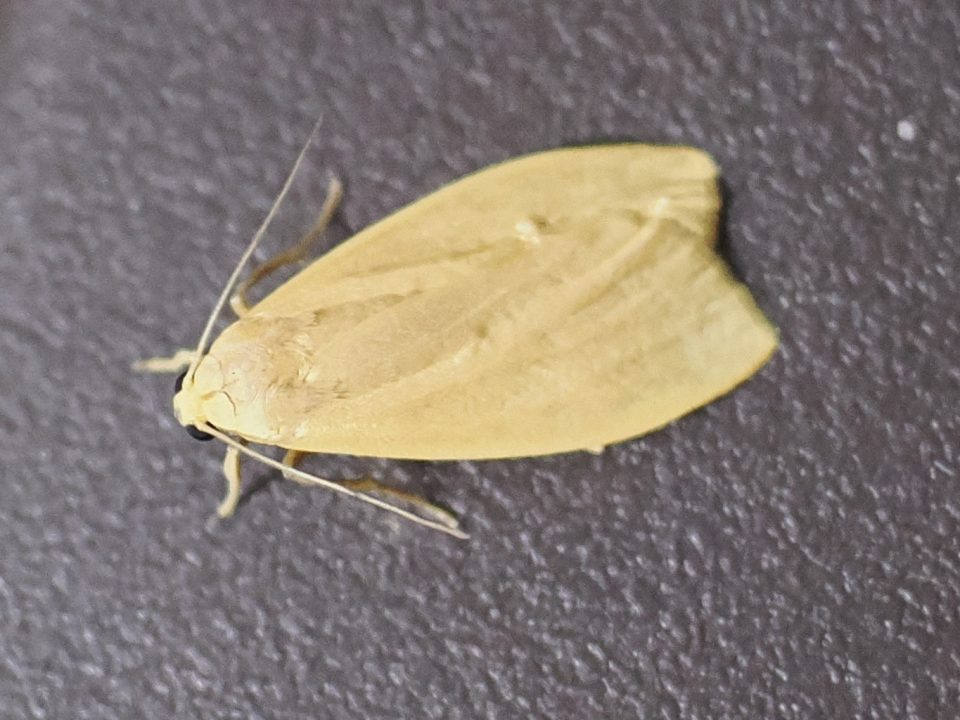
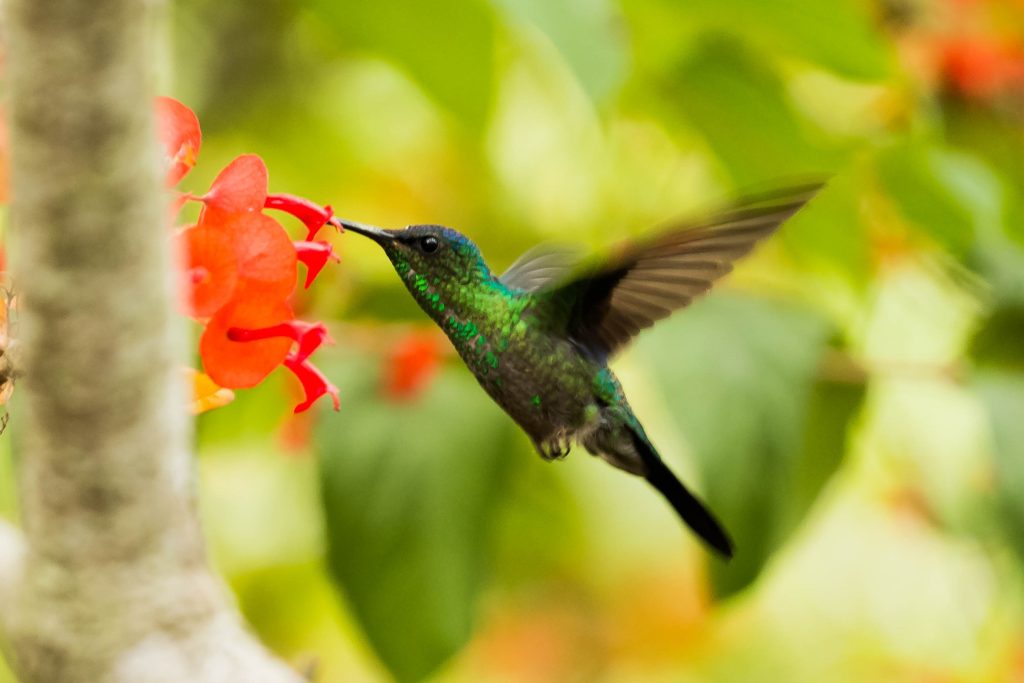
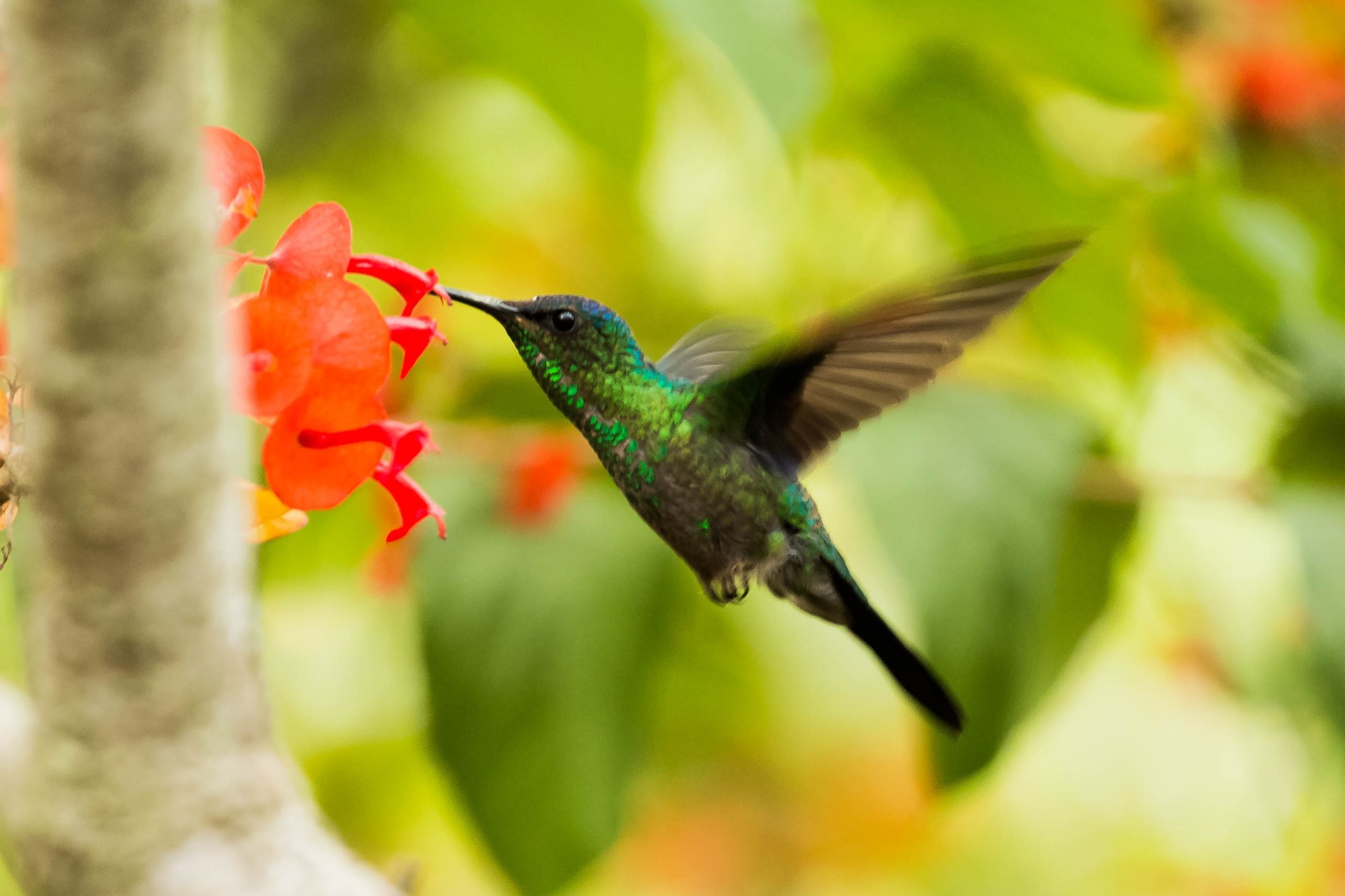
We all know that bees, especially bumblebees and honeybees, are social and hardworking insects that serve to pollinate the earth. However, did you know that many other crucial insects and animals play a part in pollination? Even though bees work hard to be excellent and effective providers, they aren’t the only ones. Some other important species that pollinate include butterflies, moths, flies, beetles, wasps, and hummingbirds.
Butterflies and moths are common pollinators that perform the act in a similar matter. Butterflies are attracted to brightly colored flowers and feed on the nectar. Moths are nocturnal pollinators that are attracted to the strong scents that are released from flowers at night. Both butterflies and moths will simultaneously transfer pollen from one flower to another as they eat.
While butterflies and moths feast on the nectar of beautiful flowers, various fly species are attracted to plants with foul-smelling or decaying flowers. This helps the pollination process as flies move from one decaying plant to the next and ensures that all plants are pollinated.
Similar to butterflies, hummingbirds are attracted to brightly colored flowers, specifically those that are long and tubular. Because of the length and narrowness of a hummingbird’s beak, hummingbirds can reach nectar that may be more difficult for other pollinators to reach.
What is pollination and why is it so important? Pollination is the act of transferring pollen grains from a male plant to a female plant. This enables plants to reproduce and produce seeds. The process is essential for the reproduction of plants and is of paramount importance for numerous reasons. Not only does pollination expand plant populations, but it also promotes crops that humans rely on to grow. Without pollinators, the source of many fruits, vegetables, seeds, and nuts would decline significantly.
When you hire a pest control company to take care of the insects around your home, you can be assured that professionals take extra measures to protect pollinators. Pest control technicians take these extra precautions as they follow proper Integrated Pest Management practices. IPM is an ecosystem-based strategy that ensures long-term pest prevention while also minimizing risks to human health and the environment.
At Insight you can have the peace of mind that our pest solutions are our expertise specialty. We pride ourselves in making your home a better place while also taking care of pests in an environmentally-friendly manner. As a technician services your home, you will notice bait traps placed throughout the exterior and interior of your home, along with chemicals that are sprayed in areas of the home. This keeps pests at bay while still promoting important pollinators to continue their job.