If you’ve spotted tiny holes in your clothing or shed skins near baseboards, you may be dealing with carpet beetles or silverfish. Neither pest is known for biting people or spreading disease, but both can cause frustrating damage to your property and be a headache to deal with.
In the Pacific Northwest, our mild, damp climate creates ideal conditions for a variety of household pests. Understanding how to identify these insects and what attracts them is the first step toward protecting your home.
What Are Carpet Beetles?
Carpet beetles are small, oval-shaped insects that feed on natural fibers and organic materials. Adult carpet beetles are usually black or brown with white, yellow, and orange scales. And while the adults are a nuisance, the larvae are responsible for the damage that you may see.
Carpet beetle larvae feed on:
- Wool rugs and carpets
- Clothing made from natural fibers
- Upholstered furniture
- Blankets and bedding
- Pet hair and lint
- Taxidermy and stored animal products
Because larvae prefer dark, undisturbed areas, infestations can often go unnoticed.
Why do Carpet Beetles Invade?
What is the main cause of carpet beetles?
Carpet beetles invade your home looking for food and shelter. These pests are primarily attracted to materials containing animal-based fibers and organic materials. Accumulations of pet hair, dust, dead insects, and stored fabrics provide everything they need to survive, thrive, and reproduce.
Signs of a Carpet Beetle Infestation
Carpet beetles can be difficult to spot, but there are several signs homeowners should watch for:
-
- Damaged fabrics: Irregular holes in wool, silk, fur, or other natural materials are often the first indicator.
- Shed skins: As larvae grow, they shed their skins, which resemble small, brown, fuzzy shells.
- Adult beetles near windows: Adult carpet beetles are attracted to sunlight and are commonly found on windowsills.
- Bare patches on rugs: Larvae may feed on carpet fibers, creating noticeable damage.
Do Carpet Beetles Go Away on Their Own?
Will carpet beetles ever go away?
Unfortunately, carpet beetles rarely disappear on their own. If food sources remain available, these pests aren’t likely to move.
To truly get rid of these pests, you’ll need to:
- Remove food sources
- Clean and vacuum thoroughly
- Inspect stored fabrics
- Address entry points
- Schedule with Insight for professional carpet beetle control
What Are Silverfish?
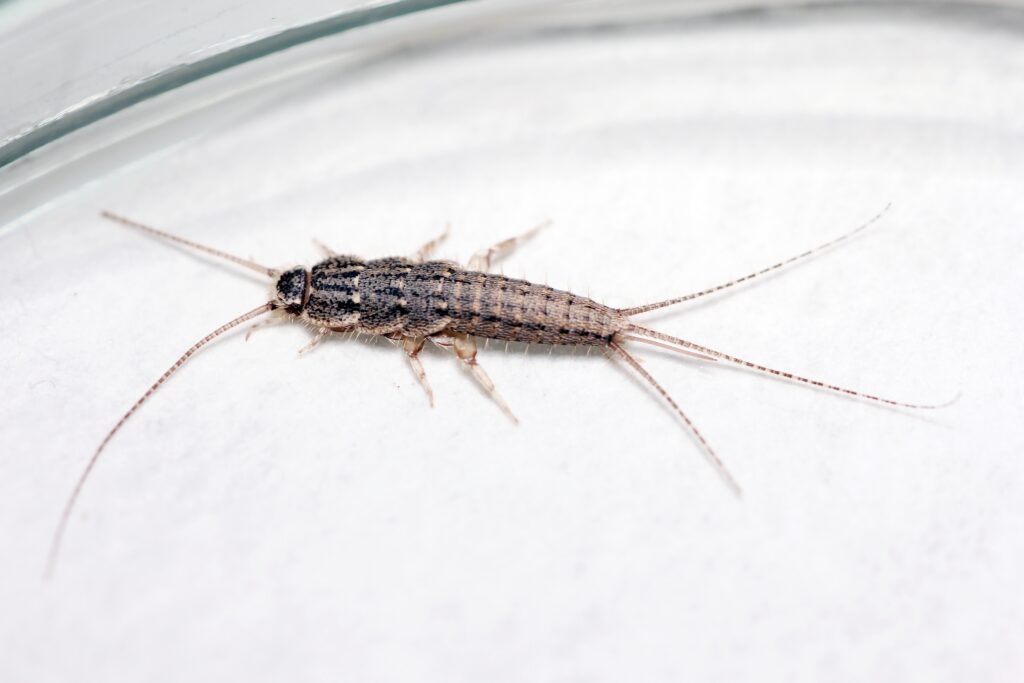
Silverfish are wingless insects known for their silvery appearance and fish-like movement. Unlike carpet beetles, silverfish prefer humid environments and feed on starches and sugars, instead of fabrics.
Silverfish are most often found in:
- Bathrooms
- Basements
- Laundry rooms
- Crawl spaces
- Kitchens
- Storage boxes
Silverfish thrive in dark, moist areas and are typically most active at night.
Why Do Silverfish Invade Homes?
Silverfish are attracted to homes that provide the three things they need most: moisture, food, and shelter. In the Pacific Northwest, our damp climate is ideal for these types of pests.
Silverfish are commonly found in:
- Bathrooms and laundry rooms
- Basements and crawl spaces
- Kitchens and pantries
- Attics and storage areas
- Closets containing books, paper, or cardboard boxes
These insects feed on starches and organic materials found in everyday household items, including paper, glue, wallpaper, books, fabrics, and even some pantry goods. Leaky pipes, poor ventilation, and excess humidity can make a home even more attractive to silverfish.
Signs of a Silverfish Infestation
Because silverfish are nocturnal, homeowners may not see them during the day. Signs of these pests include:
- Damage to property: These pests ruin books, wallpaper, or cardboard boxes.
- Yellow staining: Yellow film on stored items can be a clear indication of silverfish activity.
- Tiny black droppings: Silverfish droppings resemble pepper.
- Live silverfish: Silverfish can typically be spotted in sinks, tubs, or other damp areas.
Will Silverfish Leave on Their Own?
In most cases, the answer is no. Silverfish thrive in damp areas where moisture and food sources are consistently available, and they’re not likely to leave if these conditions continue.
The best way to eliminate these pests for good is to address the conditions attracting them:
- Thorough cleaning and vacuuming
- Reducing indoor moisture
- Properly storing clothing and textiles
- Removing clutter and cardboard storage
- Sealing potential entry points
For persistent infestations, our professional silverfish pest control can help identify hidden activity and provide solutions that address the problem.
Professional Carpet Beetles Control and Pest Control Services
When infestations become established, prevention strategies may not solve the problem. Carpet beetle larvae can hide in wall voids, attics, closets, and other hard-to-reach areas. Silverfish can also remain active in hidden moisture-prone spaces.
At Insight Pest Solutions Northwest, our professional pest control services include identifying the source of activity, locating hidden harborage areas, and developing a treatment plan tailored to your home to eliminate pests.
Our team understands the unique pest challenges homeowners face throughout Washington and Oregon. We focus on long-term prevention and practical solutions that help keep your home comfortable year-round.
If you’re noticing signs of carpet beetle activity or need help with carpet beetles control, our team is here to help. Give us a call to schedule an inspection and learn more about protecting your home from common Pacific Northwest pests.