

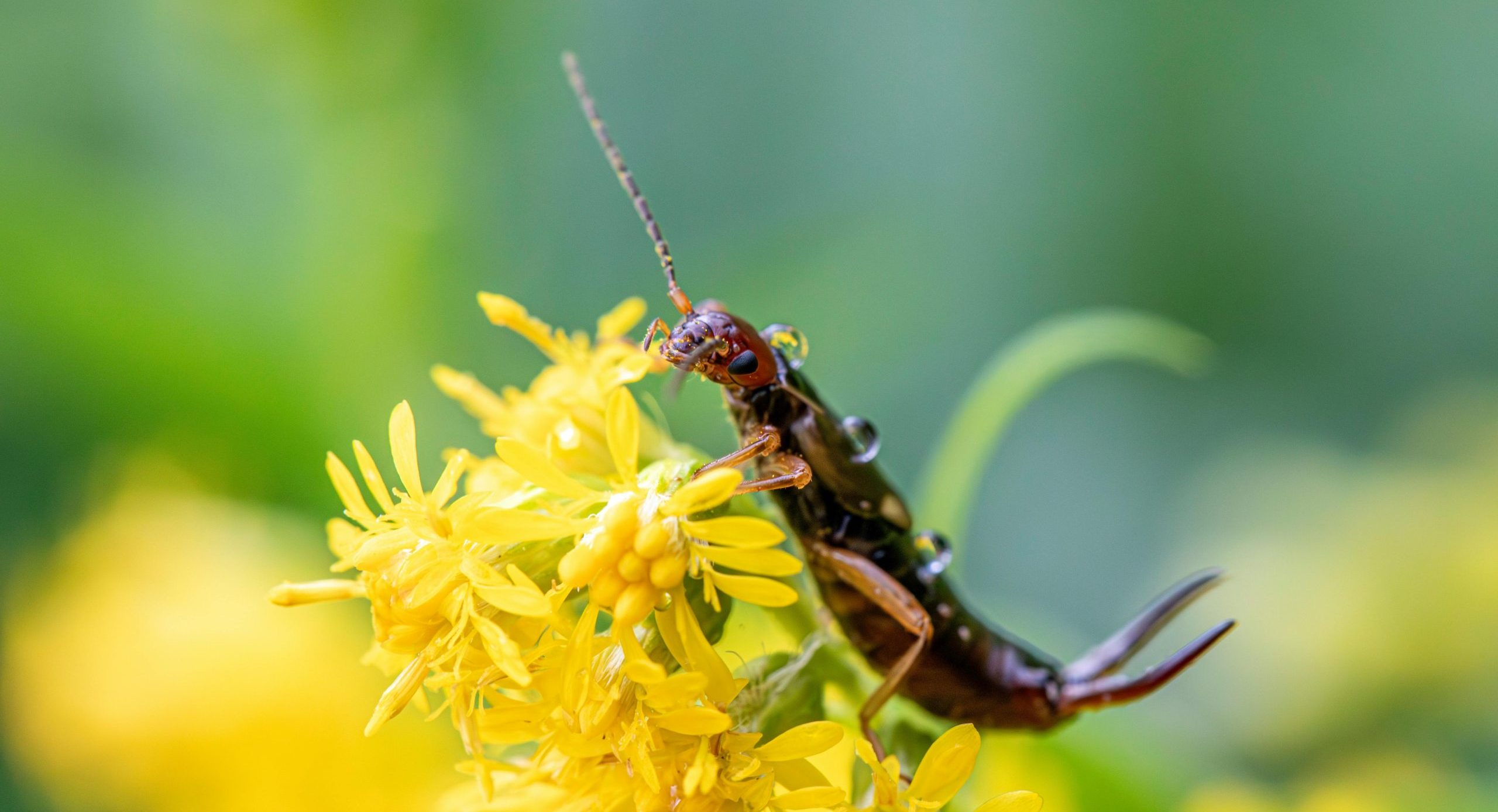
There are many myths about different pests, but earwigs tend to have some of the most common and unsettling ones. In today’s post, you will explore three earwig myths and the truth behind each one.
- Earwigs bite humans: Some people say that earwigs use their pincers to bite humans. Or that they eat human flesh. In reality, earwigs only use their pincers for self-defense, mating rituals, and capturing their occasional, much smaller prey. The most harm an earwig poses to you is if you pick it up and it pinches you.
- Earwigs infest homes: Some say that earwigs like to infest your living space. The truth is that earwigs prefer hiding away in leaf litter or other garden debris. They may come into your home on a plant or a hiding spot like a folded towel left outside but prefer to stay outdoors. They are far more likely to be found in your backyard or garden than in your home.
- Earwigs crawl into your ears: Most likely due to their name, one of the most common myths about earwigs is that they try to live or lay eggs inside your ears. The name earwig spans back thousands of years and was invented by people who also believed this myth. While there is no evidence to suggest that earwigs seek out human ears to live, it’s not impossible that they could find their way into yours by accident.
The Real Risks of Earwigs
Earwigs are primarily scavengers of plants, feeding on decomposing plant material; they can occasionally damage living plants. In gardens, earwigs can chew on leaves, flowers, and fruits, leaving irregular holes and notched edges behind. While they are not typically a considerable threat, large numbers can cause noticeable damage.
How to Manage Earwigs
Reduce Moisture: Earwigs love damp conditions, so reducing moisture around your garden can make the environment less hospitable. Ensure proper drainage for all your plants indoors and outdoors, and avoid overwatering garden beds.
Garden Cleanup: Regularly clean up garden debris such as fallen leaves, old mulch, and compost. Removing these potential hiding spots can help reduce earwig populations.
Barrier Methods: Using barriers such as copper tape around plants can deter earwigs from reaching them. These materials are repellent to insects.
Insecticidal Soaps: For a more natural repellent, use insecticidal soaps and oils that can manage earwigs. Compared to synthetic chemicals, these treatments are less harmful to the environment.
Contact Insight Pest Solutions
While Earwigs are one of nature’s most unsettling creatures and can cause significant harm to your plants if you’re not careful, they aren’t unbeatable. Using these preventative measures in your home is sure to help you never see them around again. If you or someone you know suspects an infestation, do not hesitate to contact Insight Pest Solutions. Our helpful and experienced staff and technicians are dedicated to helping you overcome any pest problem!